




The remarkable anatomical precision found in nature's creatures, from the honeybee's electrostatically charged hairs to the earthworm's soil-enriching digestive system, reveals not evolutionary accident but deliberate design, a truth increasingly acknowledged even by former atheists like Antony Flew, who recognized that the integrated complexity of life points unmistakably to an Intelligent Creator.
For most of his career, Antony Flew was a staunch atheist, famously arguing against the existence of God. His 1950 essay, Theology and Falsification, introduced the "falsification principle," a key philosophical concept. In this essay, Flew asserted that religious statements are meaningless unless they can be tested or potentially falsified, challenging the validity of theological claims. In a surprising shift, Flew announced in 2004 that he had revised his beliefs. After examining scientific evidence, particularly in the field of cosmology, he concluded that he now believes in the existence of God. He then penned the book, There Is a God: How the World's Most Notorious Atheist Changed His Mind. He writes,
"To the surprise of all concerned, I announced at the start that I now accepted the existence of a God. What might have been an intense exchange of opposing views ended up as a joint exploration of the developments in modern science that seemed to point to a higher Intelligence. In the video of the symposium, the announcer suggested that of all the great discoveries of modern science, the greatest was God... The important point is not merely that there are regularities in nature, but that these regularities are mathematically precise, universal, and "tied together." Einstein spoke of them as "reason incarnate." The question we should ask is how nature came packaged in this fashion. This is certainly the question that scientists from Newton to Einstein to Heisenberg have asked and answered. Their answer was the Mind of God… There were two factors in particular that were decisive. One was my growing empathy with the insight of Einstein, and another noted scientists that there had to be an Intelligence behind the integrated complexity of the physical Universe. The second was my own insight that the integrated complexity of life itself - which is far more complex than the physical Universe - can only be explained in terms of an Intelligent Source. I believe that the origin of life and reproduction simply cannot be explained from a biological standpoint, despite numerous efforts to do so. With every passing year, the more that was discovered about the richness and inherent intelligence of life, the less it seemed likely that a chemical soup could magically generate the genetic code. The difference between life and non-life, it became apparent to me, was ontological and not chemical. The best confirmation of this radical gulf is Richard Dawkins' comical effort to argue in The God Delusion that the origin of life can be attributed "to a lucky chance." If that's the best argument you have, then the game is over. No, I did not hear a Voice. It was the evidence itself that led me to this conclusion." (1)
The truth is that, increasingly for many in the Western scientific community, of all the discoveries of modern science - the greatest was God. Founder of NASA's Goddard Institute for Space Studies, Robert Jastrow, remarks,
"For the scientist who has lived by his faith in the power of reason, the story ends like a bad dream. He has scaled the mountains of ignorance; he is about to conquer the highest peak; as he pulls himself over the final rock, he is greeted by a band of theologians who have been sitting there for centuries." (2)
The Ingenious Design of Animals
الَّذِي أَحْسَنَ كُلَّ شَيْءٍ خَلَقَهُ
"Who perfected everything which He created..." (3)
God has created all the animals on Earth, and a comprehensive study of the internal and external characteristics reveals a remarkable level of purpose and precision in their design. Each species displays an anatomy meticulously suited to its unique role, from the intricate functions of internal organs to the specialised structures of external limbs. Whether it's through specialised feeding structures, reproductive systems, or sensory organs, each species interacts in a web of symbiotic relationships that collectively support the greater good of the ecosystem. This interconnectedness highlights an extraordinary level of design that cannot be denied. Symbiosis is the intricate and essential interdependence between different species and demonstrates how organisms are designed for each other. Each of the species listed below plays a vital role in its ecosystem, engages in symbiotic relationships, and has biological traits finely tuned to fulfil its ecological purpose. Such unity and mutual dependence simply cannot be attributed to chance or randomness. They point unmistakably to deliberate design - to God whose wisdom and power encompasses every living being.
Honeybee
Pollinates plants, which is vital for food production and the health of ecosystems.
Anatomy: Honeybees are anatomically specialised to pollinate plants efficiently, with several unique physical features that enable them to collect and transfer pollen between flowers, supporting food production and ecosystem health.
- Body Hair: Honeybees are covered in branched, feather-like hairs called plumose hairs, which increase surface area and make them exceptionally effective at capturing pollen. When they land on a flower, these hairs trap pollen grains from the flower's anthers (the part that produces pollen).
- Electrostatic Charge: As bees fly, their bodies become positively charged through the movement of their wings, which attracts the negatively charged pollen grains. This electrostatic effect helps pollen stick to the bee's body, enhancing its ability to collect and carry pollen.
- Pollen Baskets (Corbiculae): On their hind legs, honeybees have specialised structures called pollen baskets, or corbiculae. These are concave areas surrounded by a fringe of stiff hairs, which bees use to pack collected pollen for transport. They gather the pollen from their body hairs using their forelegs, transferring it to the baskets on their hind legs.
- Long Proboscis: Honeybees have a specialised, elongated mouthpart called a proboscis, which allows them to drink nectar from flowers. While feeding, their body comes into contact with the flower's reproductive organs, thereby transferring pollen from one flower to another.
- Leg Anatomy for Grooming: Honeybees have unique structures on their legs, including the tibial comb and auricle, which they use to groom and transfer pollen to the pollen baskets. These anatomical features help bees efficiently collect pollen from their body, facilitating their role as pollinators.
- Compound Eyes and UV Vision: Honeybees' compound eyes are sensitive to ultraviolet light, which helps them locate flowers more easily. Many flowers have UV patterns that guide bees to the centre of the flower, where the reproductive organs are located, ensuring efficient pollen transfer. (4)
Reflection: The honeybee is far more than a simple pollinator; it is a living system of precision engineering. Every part of its anatomy - from its electrostatically charged hairs to the ultraviolet-sensitive eyes that detect floral patterns. Its design is not just efficient; it is interdependent. The bees' existence directly supports the flowering plants it visits, which in turn sustain entire food chains, including humanity itself. Such an arrangement cannot be reduced to mere coincidence. The bee's branched hairs, pollen baskets, and proboscis form a sequence of mechanisms that operate as a unified system - nonmeaningful without the others, yet all necessary for pollination to occur. This interlocking functionality mirrors the logic of design found throughout the natural world: features that make sense only in relation to their purpose and design. When one considers the honeybee within the broader ecological network, the illusion of randomness falls apart. It is not only that the bee fits its role perfectly, but that the ecosystem relies on its fulfilment of that role. The precise compatibility between the bee's biology and the needs of flowering plants reveals a coherence that defies chance - clear signs of design by God.
Earthworm
Aerates (introduces air) and enriches soil by breaking down organic matter, which improves soil fertility.
Anatomy: Earthworms have segmented muscular bodies covered in tiny bristles (setae) that help them burrow through soil. As they tunnel, they create channels that aerate the ground. Their digestive system processes organic matter, breaking it down and releasing nutrient-rich castings, which significantly enhance soil structure and fertility.
- Segmented, Muscular Body: Earthworms have a long, segmented body composed of circular and longitudinal muscles, which allows them to burrow through soil. By contracting and expanding these muscles, earthworms push and pull their way through the soil, creating tunnels that improve aeration and soil structure.
- Bristles (Setae): Tiny bristles called setae, located on each segment, provide traction as they move through the soil. These bristles help earthworms grip and push against the soil, making their burrowing more efficient. This process loosens compacted soil, improving aeration and drainage.
- Moist Skin for Gas Exchange: Earthworms breathe through their skin, which must stay moist to facilitate gas exchange. As they move through the soil, they introduce moisture, aiding in the breakdown of organic matter and making nutrients more accessible to plants.
- Digestive System for Organic Matter Breakdown: Earthworms consume soil and organic matter, which is broken down in a specialised digestive system that includes a crop and gizzard. The gizzard grinds the ingested material, while enzymes in the intestines further decompose it. This process transforms organic matter into nutrient-rich castings, which are expelled as a form of natural fertiliser, enhancing soil fertility.
- Ability to Ingest Large Quantities of Soil: Earthworms can process large volumes of soil and organic material daily. As they ingest and process soil, they mix organic and mineral layers, distributing nutrients throughout the soil profile and creating a more fertile environment for plants. (5)
Reflection - Every aspect of the earthworm's anatomy is precisely suited for its role in sustaining life beneath the surface. Its segmented, muscular body and tiny bristles work together to aerate the soil, creating the very channels that allow air and water to reach plant roots. Its moist skin enables gas exchange, while its digestive system transforms decaying organic matter into nutrient-rich fertiliser that restores and enriches the earth. The worm's design forms a seamless chain of interdependent functions - burrowing, breathing, digesting, and fertilising - each relying on the other to complete the process of soil renewal. The earthworm does not simply exist in the ecosystem; it sustains it. Its unseen labour turns death into life, maintaining the fertility on which entire ecosystems depend. The coherence between its anatomy and its ecological function is unmistakable - a silent signature of deliberate design by God.
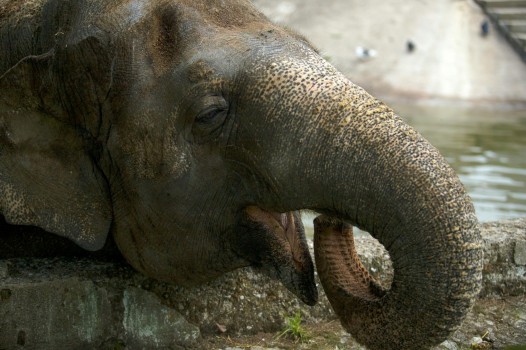
Elephant
Acts as a "keystone species" (6) by dispersing seeds, clearing vegetation, and creating water access points, benefiting various ecosystems.
Anatomy: Elephants possess strong trunks that allow them to uproot trees, strip bark, and dig for water, reshaping landscapes for other species. Their large molars grind tough vegetation, aiding seed dispersal through dung that fertilises the soil. Their massive size and padded feet enable them to create pathways and open spaces in dense habitats, directly influencing ecosystem structure and biodiversity.
- Large Trunk: The elephant's trunk, an extended fusion of the upper lip and nose, has over 40,000 muscles and is highly dexterous. It allows elephants to reach high branches, strip leaves, break branches, and even uproot small trees, effectively shaping the vegetation in their habitat. The trunk's strength and flexibility enable elephants to manipulate their environment, making it possible to open up landscapes and create pathways that benefit other species.
- Digestive System Adapted for Bulk Feeding: Elephants have a simple, non-ruminant digestive system that processes a large amount of plant material quickly. They eat hundreds of pounds of vegetation daily, including fruits, leaves, bark, and grasses, which they only partially digest. Seeds that pass through their digestive system are left in nutrient-rich droppings, enhancing seed germination and supporting plant diversity across large distances.
- Massive Body Size and Strength: Their powerful legs and robust bodies allow elephants to push over trees and clear vegetation. This action opens up forested areas, making way for grasslands and providing food sources for other herbivores. Their size also enables them to dig water holes during dry seasons, using their tusks and trunks to access underground water, creating valuable water sources for other animals.
- Large Feet Adapted for Diverse Terrains: Elephants have large, padded feet that distribute their weight effectively, allowing them to traverse various terrains without sinking, even when digging for water. These feet also help compact soil around trails and waterholes, creating well-worn paths that benefit smaller animals. (7)
Reflection - Every part of the Elephant is precisely suited for shaping and sustaining ecosystems. Its trunk acts as both a delicate instrument and a tool of immense power - designed for uprooting trees, digging for water, and clearing pathways that create access for countless other species. Its vast body and padded feet reshape landscapes as it moves, while its digestive system disperses and fertilises seeds over huge distances, renewing plant life wherever it travels. Its molars contribute to its mobility, aligning perfectly with this ecological purpose. The elephant's design operates not in isolation but in sync with its surroundings.
(Taken from the book: ‘God: There is No Doubt!’)
Footnotes
(1) Antony Flew, There is A God: How the World's Most Notorious Atheist Changed His Mind, HarperOne and “Exclusive Flew Interview,” by Benjamin Wiker, To The Source.
(2) Robert Jastrow, God and the Astronomers. Founder of NASA’s Goddard Institute for Space Studies. Werner Heisenberg, theoretical physicist and one of the key pioneers of quantum mechanics (best known for the 'Heisenberg Uncertainty Principle') is reported to have said “The first gulp from the glass of natural sciences will turn you into an atheist, but at the bottom of the glass God is waiting for you.”
(3) Surah as-Sajdah 32:7.
(4) A. M. Klein, Importance of Pollinators in Changing Landscapes for World Crops and M. L. Winston, The Biology of the Honey Bee. Harvard University Press.
(5) Clive A. Edwards and Patrick J. Bohlen, Biology and Ecology of Earthworms. Springer Science.
(6) A keystone species is a species that has a disproportionately large impact on its ecosystem relative to its abundance. These species play a critical role in maintaining the structure, diversity, and functioning of their environment. The presence or absence of a keystone species can significantly affect other species and the overall ecosystem dynamics.
(7) C. J. Moss, H. Croze, and P. Lee, The Amboseli Elephants: A Long-Term Perspective on a Long-Lived Mammal. University of Chicago Press.
Leave a Review