




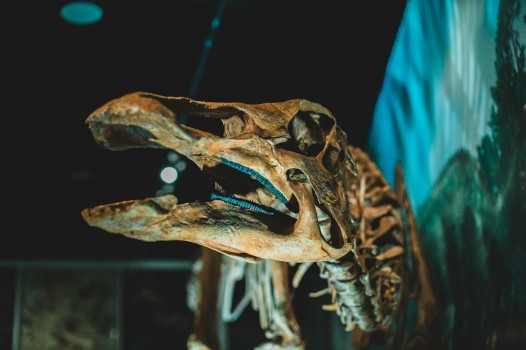
For over a century, evolution has been paraded as the ultimate triumph of "science" over religion. Yet when examined through the lens of reason and evidence, the theory collapses under its own weight. Far from disproving God, it stands as one of the greatest deceptions in modern intellectual history. This chapter dismantles the illusion of evolution as a "settled science" by exposing its contradictions, missing evidence, and dependence on unproven assumptions. When considered without bias, the facts of biology, genetics, and physics affirm not chaos and chance, but order, intelligence, design, and the unmistakable reality of a Creator.
The Oxford University Press defines evolution as the gradual process by which different kinds of living organisms develop and diversify from earlier forms during the history of the Earth. This definition emphasises the biological aspect of evolution, particularly how species adapt over time in response to environmental changes.
Originally proposed by Charles Darwin in his 1859 bookOn the Origin of Species, the theory of evolution explains the existence and diversification of species as interconnected branches that trace back to basic cells in aquatic waters. The theory suggests how species evolve over time through processes such as natural selection, where advantageous traits are preserved and passed on to future generations.
In this way, one could explain the existence of various species without invoking a Creator. Instead, the "creator" of each species would be considered its predecessor, from which it supposedly evolved. As Richard Dawkins said,"Darwin made it possible to be an intellectually fulfilled atheist."
We can summarise the main evidence used by proponents of the theory of evolution as follows:
1. Fossil record -They argue that the fossil record provides a wealth of evidence for the existence of extinct species and the transitional forms that illustrate the gradual changes in species over time. They state that the fossils show clear patterns of organisms appearing in a particular order, with simpler forms found in older layers and more complex forms in more recent layers.
2. Comparative anatomy -They state that comparative anatomy reveals striking similarities in the structures of different species, providing evidence for common ancestry. Homologous structures, such as the pentadactyl limb structure found in mammals, suggest a shared evolutionary history and indicate descent from a common ancestor.
3. Embryology -They say that the embryological development often exhibits similarities among different species, reflecting shared developmental pathways. The presence of embryonic features that resemble ancestral traits and the occurrence of vestigial structures in embryos support the evolutionary connection between species.
4. Biogeography -The distribution of species across different geographical regions, they say, is consistent with evolutionary patterns. The presence of related species in close-proximity and the absence of certain species in isolated regions can be explained by migration, adaptation, and speciation over time.
5. Genetic evidence -They argue that the DNA and genetic analysis provide powerful evidence for evolution. Comparative genomics demonstrates the presence of shared genetic sequences among different species, indicating common ancestry. Genetic mutations, changes in DNA over generations, can be traced and used to construct evolutionary relationships and timelines.
An evolutionary biologist would typically explain the process of evolution as follows: "Species evolving into other species would occur through a process called 'speciation' which occurs over a multitude of generations as populations adapt to their environments. This would begin with genetic variation within a species, which arises from mutations, gene recombination, and other factors. These variations would provide different traits among individuals, some of which offer survival or reproductive advantages in certain environments."
Then over a period of millions of years, "natural selection" would favour individuals with advantageous traits, allowing them to reproduce more successfully and pass those traits to future generations. Additionally, random genetic changes, known as genetic drift, would further alter the gene pool, especially in smaller populations. When a population becomes geographically or reproductively isolated, it stops exchanging genes with the original group. Over many generations, this isolation would lead to significant genetic divergence between populations.
As these genetic differences would accumulate, the isolated population would become so distinct that even if it were to reunite with the original group, they would no longer be able to interbreed and produce fertile offspring. This would mark the creation of a new species. The process is typically gradual, taking thousands to millions of years, and occurs in various ways, such as through geographic separation (allopatric speciation) or through ecological or behavioural changes within the same environment (sympatric speciation). The example of "Darwin's finches" is given to demonstrate this, where species evolved different traits, such as beak size, to adapt to distinct ecological niches on the Galapagos Islands.
In summary, evolutionary theory maintains that the gradual accumulation of genetic changes and adaptations over vast spans of time has led to the diversification of life, branching from common ancestors into the multitude of species observed today, through random processes that are unguided and without foresight. Richard Dawkins writes,
"Natural selection, the blind, unconscious, automatic process which Darwin discovered, and which we now know is the explanation for the existence and apparently purposeful form of all life, has no purpose in mind. It has no mind and no mind's eye. It does not plan for the future. It has no vision, no foresight, no sight at all. If it can be said to play the role of watchmaker in nature, it is the blind watchmaker."
Taken from the book:God: There is No Doubt!
Leave a Review